The view from Russia: The Ukraine conflict is entering its final phase
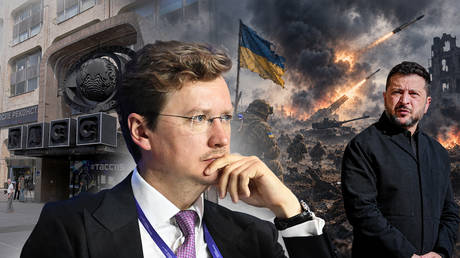
The view from Russia: The Ukraine conflict is entering its final phase
As Washington shifts the Ukraine burden to Europe, Andrey Sushentsov examines the EU’s strategic limits and its costly confrontation with Russia
Andrey Sushentsov, dean of the Faculty of International Relations at MGIMO and a member of the Scientific-Expert Council under the Security Council of the Russian Federation, discusses why Western Europe is so afraid of a direct confrontation with Russia, how the US is shifting the burden of the Ukraine crisis onto the EU, why the pyramid of trust surrounding Kiev is crumbling, and when the Ukraine conflict might come to an end.
His interview, first published in Russian by , was translated and edited by the RT team.
America sails away, Europe gets the billEvgeny Kuznetsov: You have noted that the US is seeking to extricate itself from the Ukraine crisis by shifting the burden onto Western Europe. If Washington does indeed distance itself, are these Europeans prepared, politically and economically, to assume the role of Ukraine’s principal security guarantor?
Andrey Sushentsov: The US strategy in the Ukrainian crisis initially reflected its archetype as a maritime power employing a continental sword in its confrontation with a major continental power. This involves a neighboring country with military resources, which the maritime power supports in order to weaken its rival.
Ukraine was well suited to this role, as a large state with substantial armed forces, motivated to confront Russia. But the limitation of such a strategy is that you can’t fully control the behavior of the sword. Nor is it entirely resource-efficient, there’s a limit to the resources that can be allocated to it, and if no turning point is reached in the confrontation, further support yields no additional gains in effectiveness.
The Americans realized early on that many of their interests in this crisis had been achieved and prepared to withdraw. They did what a maritime power usually does when it decides to turn its attention elsewhere as they sailed back to their own region. The main difference between a maritime power and a continental power lies in the freedom to choose where to deploy military forces. A maritime power can choose where to deploy them and launch strikes across various parts of the world’s oceans. This is usually carried out in the form of raids, as large-scale expeditionary campaigns rarely prove successful. The US decided it was time to leave.
But they didn’t want the withdrawal to be accompanied by the collapse of the Ukrainian regime. The US incorporated its withdrawal and the reorientation of its priorities towards East Asia into its policy towards its NATO allies. It handed over responsibility for supporting Ukraine to them and assumed the role of moderator as a negotiator who, rather than being the instigator of the crisis, is steering it towards a resolution. US strategic documents state an interest in bringing the Ukraine crisis to an end.
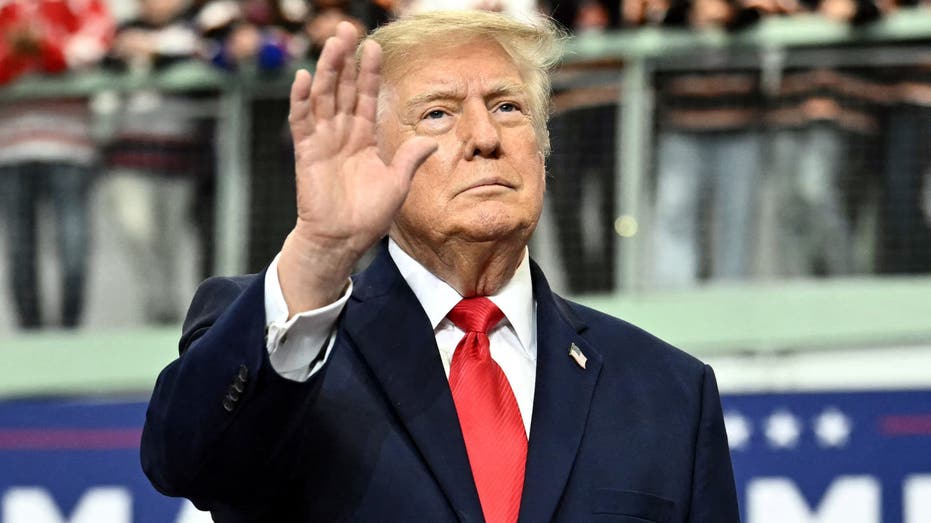
European leaders join Ukraine's Vladimir Zelensky for a White House meeting with US President Donald Trump. August 18, 2025. © Win McNamee/Getty Images Yet the US behaved treacherously toward both Ukraine and its European allies, saddling them with this burden without warning. The Western Europeans lack military resources, technological capabilities, strategic thinking, and awareness of their own interests comparable to those of the Americans, qualities that enable them to weigh up causes and consequences, to discern what is achievable and what is not by military means, and to identify where their bloc’s interests lie in this crisis.
These Europeans currently have a financial instrument of considerable weight at their disposal, in essence, the only one they can draw upon. They are using it wastefully, given the domestic debt of most major European states is approaching or exceeding 100% of GDP. They can’t obtain external compensation for their military expenditure, and there’s no hope of



 19.4c