Travelers to hot spot sternly warned by State Department as officials deny wider Gulf shutdown
Travelers to hot spot sternly warned by State Department as officials deny wider Gulf shutdown
Americans traveling in and through the Middle East have a new wrinkle to sort out.
The U.S. State Department has pushed back against circulating reports that it directed non-essential government personnel and their dependents to leave — clarifying that the departure order applies only to Saudi Arabia.
State Department spokesperson Tommy Pigott dismissed the broader regional claims, calling them "inaccurate," as the department released a formal statement confirming the targeted drawdown within the kingdom. "The U.S. Department of State issued an ordered departure for non-emergency U.S. government employees and their family members in Saudi Arabia," the department said.
The clarification arrived amid an uptick in militant strikes aimed at .
In the statement shared with Fox News Digital, the spokesperson noted that "Iranian-supported Houthis have increasingly engaged in hostilities against Saudi Arabia, including attacks on civilian airports and other critical infrastructure resulting in civilian casualties and ."
Officials warned the current security environment remains highly volatile — adding that the conflict "has the potential to escalate rapidly, including beyond that immediate area."
The department emphasized that the safety and security of its staff and their households remain its highest priority.
The United States "will continue to take all necessary steps to protect and support them as they return to the U.S.," the spokesperson said.
In late September, the State Department renewed its warning to Americans traveling in and through amid escalating regional tensions.
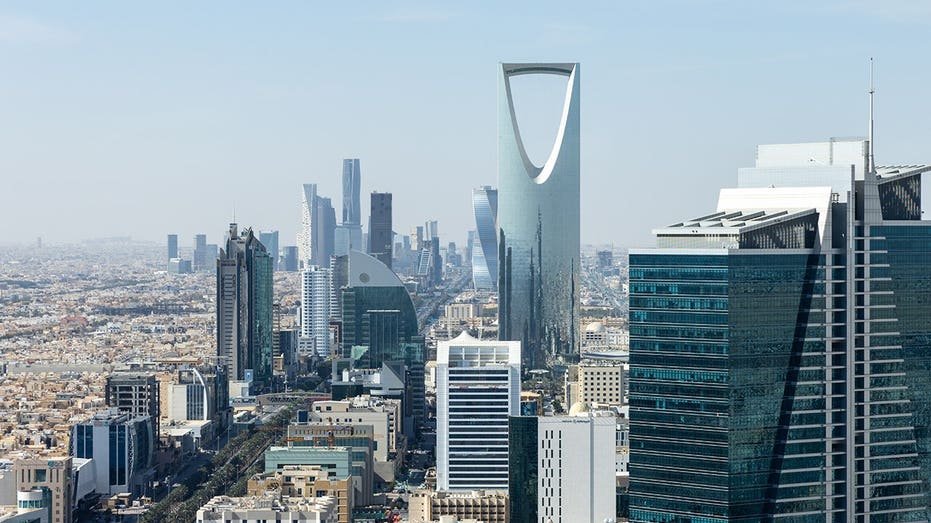
The warning came as Iran-backed Houthi rebels launched a ballistic missile toward Riyadh, Saudi Arabia, which Saudi Arabia said its air defenses intercepted.
Residents reported hearing an explosion and later seeing a plume of smoke near King Khalid International Airport, according to The Associated Press (AP).
No casualties or damage from the attack were reported at the time.
In an X post in September, the State Department's Bureau of Consular Affairs warned that the security environment in the Middle East "remains complex with the potential for unforeseen escalation."
The agency added, "Americans currently in the Middle East should exercise heightened vigilance and be aware of potential flight cancellations, and travel disruptions."
Officials specifically cited hostilities between Saudi Arabia and the Iran-backed Houthis in its warning.
"Iranian-supported Houthis have engaged in hostilities against Saudi Arabia, including civilian airports," the post said.
"This military conflict has the potential to escalate rapidly. Americans outside the Middle East should seriously to and through the region."
The agency also advised those traveling to or from the region to monitor airport and airline operations, warning that U.S. diplomatic facilities have been targeted, including outside the Middle East.
In June, U.S. officials similarly urged Americans to remain vigilant as tensions mounted across the region.
At the time, officials warned that airspace closures, demonstrations and threats to locations associated with the United States could disrupt travel with little notice.
The State Department also maintained its "Level 3: Reconsider Travel" advisory for Oman in an








 16.3c