Russian victories, Spanish tragedy, elections without answers: RT stories that shaped the week
Russian victories, Spanish tragedy, elections without answers: RT stories that shaped the week
This week we also covered the Alyoshki ceasefire with Ukraine and Ursula von der Leyen’s attempt to shoehorn Canada into the EU
Russia’s diplomatic victoriesFour years of unprecedented sanctions and an active conflict didn’t deter four dozen African nations from sending delegations to Moscow for the third Russia-Africa Summit this week. Forty-eight out of Africa’s 54 countries were represented at the summit, 22 of them by their heads of state.
More than 60 bilateral and multilateral agreements were signed, including a Russia-Africa Action Plan for 2027-2029, and a joint declaration opposing unilateral sanctions and the unlawful seizure of civilian shipping, pledging deeper counter-terrorism cooperation, and supporting increased African representation on the UN Security Council. RT , and to help bring about the of Africa.
Before he welcomed the African delegations to Moscow, with Finnish President Alexander Stubb – a figure repeatedly floated as – and Norwegian Prime Minister Jonas Gahr Store. Putin later said that Russia welcomes any steps aimed at restoring full-fledged and comprehensive relations, and while the call brought the Russia/Ukraine conflict no closer to an end, Russian analyst Sergey Strokan noted that it should that metal fatigue is setting in across Europe’s political machinery – and that time is running out for the regime in Kiev.
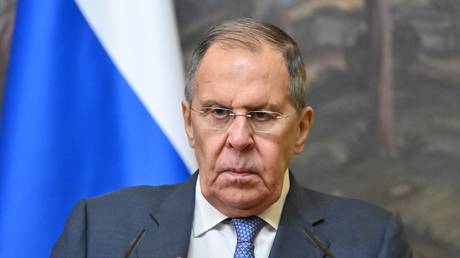
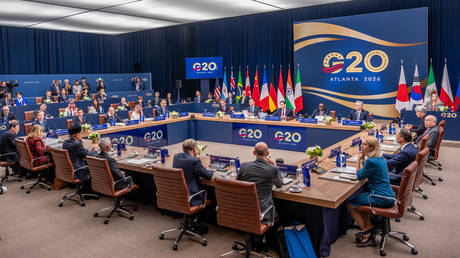
With , and Stubb and Store incurring the wrath of their fellow European leaders for even daring to speak to Putin, the tone in the US could not be more different. There, Russian Foreign Minister Sergey Lavrov touched down in Atlanta for a meeting of G20 foreign ministers on Friday. Sanctions on Russian diesel exports have been lifted, trilateral talks between Moscow, Kiev, and Washington are slated for next month, and Putin has been invited to the G20 leaders’ meeting in Florida in December. However, the most tangible result of Russian-American diplomacy came 5,000 miles away from Washington, in the besieged town of Alyoshki.
Russian Foreign Minister Sergey Lavrov takes part in the G20 foreign ministers' meeting in Atlanta, Georgia, October 30, 2026 © Getty Images; Michael Kappeler The Alyoshki breakthroughMoscow and Kiev agreed to a temporary ceasefire in the frontline town of Alyoshki in Russia’s Kherson Region last Friday, with both sides agreeing to suspend all military operations to allow humanitarian aid deliveries and prepare for civilian evacuations.
Read more The Kremlin confirmed this week that the ceasefire was , who said she was moved by the plight of Alyoshki’s elderly residents who urgently need medical attention, medicine, food, and clean water.
Ukraine had accused Russia of preventing civilians from leaving the embattled town, but residents who escaped earlier this month told RT that Alyoshki was , who carried out carrying food, fuel, and medicine.
As Russian forces got to work surrounding Alyoshki, Kremlin spokesman Dmitry Peskov said that the humanitarian truce, if successful, could set a precedent for other areas. The , Dmitry Lubinets, who worked together on the ceasefire, certainly seem to confirm that cooperation is possible.
Three elections, fewer answersBrazilian President Luiz Inacio Lula da Silva on Sunday, in the first of three major elections this week. After a first-round loss to Bolsonaro, whose father was jailed last year Brazil’s Lula-aligned Supreme Federal Court, Lula won the runoff election by a margin of 51.79% to 48.21%, securing a fourth term in office.
Read more The drama did not end when the votes were counted. Bolsonaro was ordered by the court to surrender his passports the following day, but he instead , with the help of Argentina’s right-wing government. After landing in Florida, Bolsonaro accused Lula of fraud, and pledged to lead the opposition from abroad.
US President Donald Trump is a close ally of Bolsonaro, an