What a British think tank gets wrong about Russia-s ultimate weapons
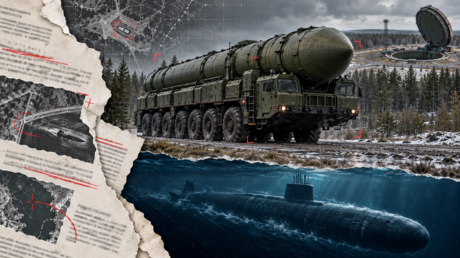
What a British think tank gets wrong about Russia-s ultimate weapons
A new RUSI report questions the future of Moscow’s strategic forces. Its conclusions leave crucial parts of the picture out.
A few days ago, the Royal United Services Institute (RUSI) a report titled ‘Russia’s Nuclear Deterrent and Its Weapons Procurement’. The report examines the development of Russia’s nuclear triad amid stringent financial constraints and the rising threat of a potential US non-nuclear counterforce strike.
The author of the report, Sidharth Kaushal, makes conclusions based on the publications of Russian military experts in the journal ‘Voennaya Mysl’ (Military Thought), as well as established Western practices for analyzing Russia’s nuclear capabilities.
A British diagnosis of Russia’s nuclear futureHere are the key takeaways from the report:
Paradigm shift: Russia is being compelled to shift its focus from a posture of assured retaliation (increasing the survivability of mobile missile systems and submarine-launched ballistic forces to effectively counter a first strike) to a Launch on Warning (LOW) posture (employing its arsenal early against an enemy attack).
Vulnerability of mobile forces: Advancements in US space reconnaissance make the concealment of mobile ground-based systems increasingly ineffective.
Greater reliance on silo-based launchers, which are viewed as more secure bases for strategic missiles. Silo-based systems will comprise a greater proportion of throw weight, particularly since RS-28 Sarmat heavy intercontinental ballistic missiles are silo-launched to ensure instant readiness.
Economic challenges: According to the report, modern Russia cannot pursue a large-scale quantitative increase in its missile arsenal due to the enormous costs associated with developing and maintaining the conventional armed forces amidst the ongoing military operation in Ukraine.
Due to cost parity, the domestic production costs of strategic missile systems compete with conventional weaponry – for example, producing one Yars missile is equivalent to the cost of 15 T-72 tanks.
A labor shortage in the nuclear and missile industries is unavoidable in the current conditions and necessitates a significant increase in wages.
The author also provides interesting assessments of specific weapons systems:
RS-28 Sarmat: The report projects no quantitative increase in the deployment of these missiles. Emphasis is placed on a short boost phase and a high payload capacity for overcoming missile defense systems.
The medium-range Oreshnik missile is seen as a priority in the European theater of operations and as a tool for preemptively neutralizing US Dark Eagle systems in Europe. Given manufacturing shortages, it is expected to be deployed primarily in its nuclear variant.
The long-range KH-BD air-launched cruise missile (with a range up to 6,500 km) is designed to be carried by Tu-95 and Tu-160 bombers, in light of the lack of progress on the PAK DA next-generation stealth strategic bomber.
Read more Burevestnik and Poseidon programs are considered technically unfeasible by the author of the report; due to the high costs, they are perceived primarily as methods of psychological intimidation
Space-based warfare: The report highlights the jamming of US missile defense systems as a major priority for Russia. It predicts the launch of nuclear electronic warfare satellites into orbit and the eventual deployment of full-scale space-based nuclear weapons to create massive plasma fields in the ionosphere.
How can we assess this report? Generally, the picture is more complex than described. Like in the Indian parable about the blind men and the elephant, the author of the report sees certain aspects of the ‘elephant’ but fails to see the general picture, which may be quite different. Let’s take a closer look.
The logic behind Russia’s nuclear shieldRegarding the structure of the strategic nuclear forces and