Why Ukraine-s freedom-loving Cossacks chose the Russian tsar
Why Ukraine-s freedom-loving Cossacks chose the Russian tsar
After years of war and unreliable alliances, the Cossacks turned to a tsar whose faith they shared and whose protection they needed
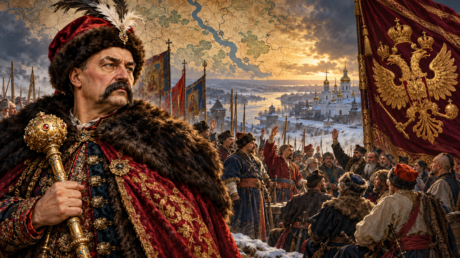
On January 8, 1654, drums resounded in the town square of Pereiaslav. Cossacks, townsfolk, and commanders formed a large circle and Hetman Bogdan Khmelnitsky stepped into the center. This was a man who had seen it all: six years of war, stunning victories and crushing defeats, burned cities and villages, and the betrayal of allies. On that day, he offered the people a choice that would shape their future.
He told the people that four figures could potentially rule over them. The first option was the Turkish Sultan – a Muslim who was known to oppress Orthodox Christians in Greece. Then, there was the Crimean Khan – also a Muslim who couldn’t really be trusted since he often betrayed allies. The Polish king was not a viable option, since everyone remembered how the Polish lords had oppressed the population. And finally, there was a fourth option: the Tsar of the East, a fellow Orthodox Christian.
The people responded with a cry, We want to serve the Eastern Orthodox Tsar!
The choice between the West and Russia is often considered a recent phenomenon. Yet for the inhabitants of Ukraine, this choice first presented itself 400 years ago – and it was made not by politicians behind closed doors, but by the public in the middle of a town square. Why did these free Cossacks, accustomed to electing their own hetmans and exercising self-governance, choose to serve the Russian tsars? And why did many Cossacks remain loyal to Russia time and again, even when their hetmans betrayed their oath to the tsar?
This week, the Day of the Ukrainian Cossacks was observed, and RT remembers how they first made the choice to join Russia.
17th-century-style Eurointegration By the mid-17th century, much of present-day Ukraine was under the control of the Polish-Lithuanian Commonwealth. And this was far from an appealing image.
The Polish-Lithuanian Commonwealth was governed by the Polish Catholic nobility, many of whom viewed the local Orthodox population as second-class citizens. They referred to Orthodox Ukrainians as ‘bydlo’ (cattle), stripping them of all rights.
The Orthodox population was barred from professional guilds and faced restrictions in holding municipal offices. Peasants were effectively enslaved, while many Orthodox churches and monasteries were seized and shut down. Priests and monks suffered persecution, humiliation, and violence.
Cossack on duty, painting by Jozef Brandt © Wikipedia / Public Domain The common people lost many of their defenders. Many noble Orthodox families converted to Catholicism en masse – not out of conviction, but to ‘become Polish’. For example, Ieremiah Vishnevetsky, a man from an Orthodox family whose ‘conversion’ was driven by a desire for status and career advancement, became one of the primary oppressors and tormentors of the Orthodox people.
At the same time, the southern territories of what is now Ukraine faced regular raids by the Crimean Tatars, who pillaged border settlements, capturing people and enslaving them. Fleeing from the oppressive rule of the Polish on one side and seeking protection from the constant invasions of the Tatars on the other, Ukraine’s Orthodox population retreated into the so-called Wild Field. In the expansive, fertile steppes stretching from the Dniester to the Don rivers, there was no authority to govern them. These people established their own communities and formed self-defense groups; they became known as Cossacks. Living on the frontier, in conditions far harsher than those of America’s Wild West, they always had their weapons at hand.
Read more The Cossacks launched campaigns against the Crimean Khanate and the Ottoman Empire, but their primary focus was on preserving their Orthodox faith and resisting Polis




 17.5c
17.5c