Houthis emerge as global threat beyond Iran control amid Saudi strikes, former envoy warns
Houthis emerge as global threat beyond Iran control amid Saudi strikes, former envoy warns
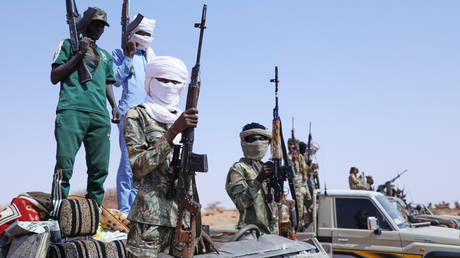
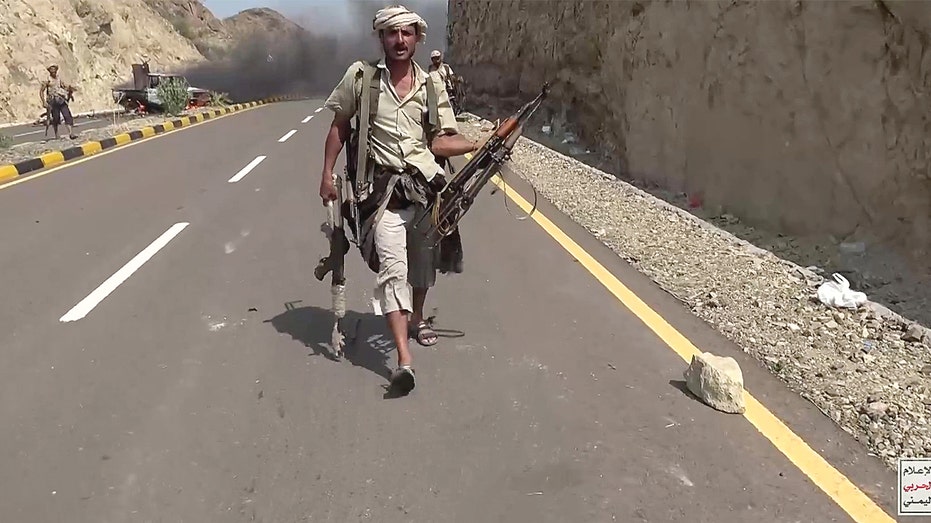
The are increasingly operating independently of Tehran, posing a "clear and very present danger" on the international stage as the terror group rearms and sharpens its strike capabilities, a former U.S. envoy warned Thursday.
The warning came amid deadly missile and drone attacks on Saudi Arabia in recent days and growing threats to global shipping routes and critical Middle East infrastructure in the run-up.
Turki al-Maliki, spokesperson for the Saudi-led coalition in Yemen, also confirmed Thursday that Houthi attacks on King Khalid International Airport in Riyadh had killed 17 and injured 333 others from Oct. 7-11.
Speaking at a news conference in Riyadh, al-Maliki said the Oct. 10 attack involved 10 drones, missiles and other projectiles.
"King Khalid International Airport has been subjected to 20 attacks since (Oct. 1)," he noted.
Tim Lenderking, who served as U.S. special envoy for Yemen from 2021 to 2025 and was posted to Saudi Arabia from 2013 to 2016, said Saudi officials had warned more than a decade ago that the Houthis would become a major threat, a prediction he says has now materialized.
"The Saudis were very clear to our leaders that they viewed the Houthis as a major threat," Lenderking said of his time in the kingdom a decade ago.
At the time, he said, the group was "quietly building up their capability, burnishing their narrative of why they sought to lead Yemen as a messianic group, as a group from northern Yemen, with an agenda, with a mission."
The Houthis had emerged as a religious and political movement in Yemen in the 1990s, but their ties to Iran developed into a military partnership after 2014, when Tehran expanded its assistance and training during Yemen's civil war.
"The Houthis don't really need the Iranians anymore," Lenderking, a former acting assistant secretary for Near Eastern affairs at the U.S. State Department, continued, adding it was still "a very important relationship that "enabled the Houthis to become the powerful force that they are."
Lenderking, now a distinguished diplomatic fellow at the Middle East Institute (MEI), said, over time, the Houthis had developed their own "homegrown indigenous capability" as they capitalized on any disunity across the Gulf region.
Saturday's missile and drone attack on King Khalid International Airport in Riyadh raised concerns that President Donald Trump could be drawn into a broader regional conflict as Saudi Arabia seeks U.S. assistance.
Asked whether the U.S. would defend Saudi Arabia against further attacks, Trump said, "You'll find out soon."
NEW RISK FOR US CONSUMERS AS IRAN-BACKED ATTACKS THREATEN A SECOND MAJOR OIL CHOKEPOINT
Speaking at an MEI briefing, Lenderking said the Houthis' sophisticated weapons and targeting capabilities have transformed the group from a regional insurgency into an international security threat.
"They have the capability to hit around the region, including up into the northern reaches of the Red Sea. So, this is a regional problem, and given the fact that the Houthis control the west coast of Yemen," Lenderking said.
"It's an international probl







 27.4c
27.4c