Sacha Baron Cohen says 'Ali G: Who Iz I?' is his last in this style of comedy, calling them too risky
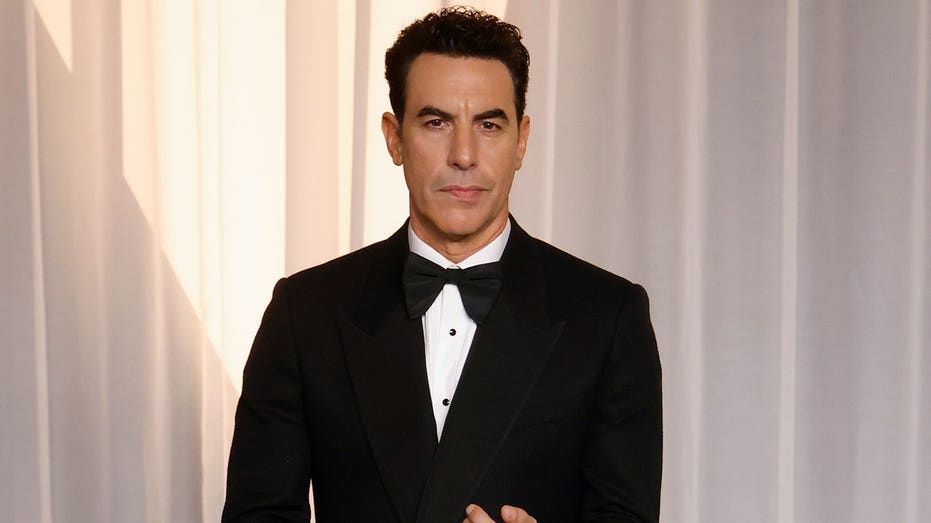
Sacha Baron Cohen says 'Ali G: Who Iz I?' is his last in this style of comedy, calling them too risky
is done starring in over-the-top comedies.
In a recent interview with The Hollywood Reporter, the 55-year-old actor confirmed that his new movie, "Ali G: Who Iz I?," will be his last in the risky, character-driven comedic style that made him famous.
"I want to do stuff that challenges me," he told the outlet. "So again, Im not doing 'Borat 3,' which also would be incredibly challenging. Again, this movie I just did is the most challenging movie Ive ever done, but Im not doing more."
The actor has said he was done with this style of comedy in the past, but decided to make this movie because he is "terrified of where our society is headed" and thinks of his comedy as a way to comment on it.
He explained that through his films, he can "show the extremism on both sides of the political spectrum and the danger of virtuous violence." He added that at the end of the day, he also "wanted to make the funniest film thats ever been made."
"These really are , but I suppose I made it because Im scared of this world of conspiracies and lies that are spread by social media and now by AI," he said. "If we dont have these shared facts, then democracies crumble, and we cant have a tolerant society. And to make people laugh is therapy."
Cohen's early breakthrough came in 2000, with "Da Ali G Show," and he later gained international recognition with the release of "Borat" in 2006.
He followed that up with "Bruno," "The Dictator," "Who is America" and "Borat Subsequent Moviefilm," as well as some dramatic roles in "The Trial of the Chicago 7," "Les Misérables" and "Disclaimer."
Throughout the interview, Cohen explained that these comedies "are dangerous to make" and are "incredibly demanding" on the body, but that he and his crew "try to limit the risks and keep everybody safe."
He described the final scene of his latest project as "an eight-hour continuous scene that takes place over 12 locations" with a lot of different elements, filmed as "a continual shot."
"Theres gunfire in it. Theres a medical procedure. There are drones, there are explosions, and its taking place in the desert," he said. "On the way to shooting it, I bumped into one of the great stuntmen and he said, 'You will go to hospital if you make this movie,' because I explained Im wearing a prosthetic head in a fat suit. He said, 'Youll be so dehydrated youll be in hospital for two weeks.'"
The "Balls Up" star explained that he hired "an endurance specialist who does the Tour de France" to be next to him throughout filming and that, despite the precautions, "a number of people went to the hospital for dehydration."
Despite how it may seem, Cohen assured fans he "will never do a scene if I think Im actually going to die."
"I was about to do a scene [in 'Borat 1'] and we had a cop who had his gun on his thigh and I said, 'Why is your gun on your thigh?' He goes, 'Well, I need to be really fast to draw in this area.' I said, 'Well, how close are you to me?' And he said, 'Ill be with you within three minutes.' I realized that was not a good thing to do, so I pulled that scene."
On the other hand, however, Cohen agreed to film a scene at a gun rights rally for the second "Borat" film, knowing there was a chance he could be shot, but said, "I felt it was an important film to be made."
His risk-taking ways have paid off, as he received two Academy Award nominations for writing "Borat" and its sequel, in 2007 and 2021 resp